Paint guide · 11 minute read
Paint correction vs ceramic coating: what comes first?
Correction improves the surface. Coating protects the prepared finish. They are related, but they do different jobs—and choosing in the wrong order can preserve defects you wanted removed.
The direct answer
Paint correction changes appearance. Ceramic coating changes protection and maintenance.
Paint correction uses controlled machine polishing to improve defects in the clear coat. It is the service that addresses swirl marks, wash marring, haze, oxidation, dullness, and many light scratches.
Ceramic coating is applied after the surface has been properly cleaned and prepared. It can improve water behavior, make routine cleaning easier, and help the finish retain gloss—but it does not remove defects.
What paint correction actually does
Automotive paint usually includes a clear coat above the color layer. Many visible swirls and fine scratches are defects in that clear layer. Machine polishing removes or refines an extremely small amount of material around those defects so light reflects more evenly.
That is why corrected paint can look darker, sharper, glossier, and more reflective even though no new color has been added. The improvement comes from reducing the visual disruption caused by defects.
Correction is not the same as glaze or wax
A glaze may temporarily fill some marks. Wax can add gloss and short-term protection. Paint correction is intended to improve the surface itself through controlled polishing. The safest effective approach depends on paint hardness, defect depth, vehicle history, panel condition, and the result requested.
What ceramic coating actually does
A ceramic coating is a liquid protection product that is carefully applied to a prepared surface and allowed to set. Its practical value is not that the vehicle becomes invincible; it is that the paint can become easier to maintain and better able to resist common environmental contamination.
A coating may support stronger water behavior, easier drying, gloss retention, and simpler routine cleaning. It does not stop every scratch, rock chip, scrape, stain, or wash mark, and it does not remove the need for proper washing.
Useful expectations
- Improved water behavior
- Easier routine cleaning
- Prepared gloss retained with care
- Added resistance to common contamination
Unrealistic expectations
- Scratch-proof paint
- No more washing
- Automatic defect removal
- Protection from every chip or scrape
Which paint defects can correction improve?
Correction potential is determined by depth and condition, not just by the name of the defect. A fine scratch in the clear coat may improve dramatically. A mark that cuts through the clear coat cannot be safely polished away.
| Condition | Often polishable? | Important limitation |
|---|---|---|
| Swirl marks | Often | Depth and paint sensitivity still matter. |
| Wash marring | Often | Severe or repeated damage may require deeper work. |
| Oxidation / haze | Sometimes to often | Failed clear coat cannot be restored by polishing. |
| Light scratches | Sometimes | Deeper lines may remain for safety. |
| Rock chips | No | Missing paint requires touch-up or repair. |
| Clear-coat failure | No | Refinishing is required. |
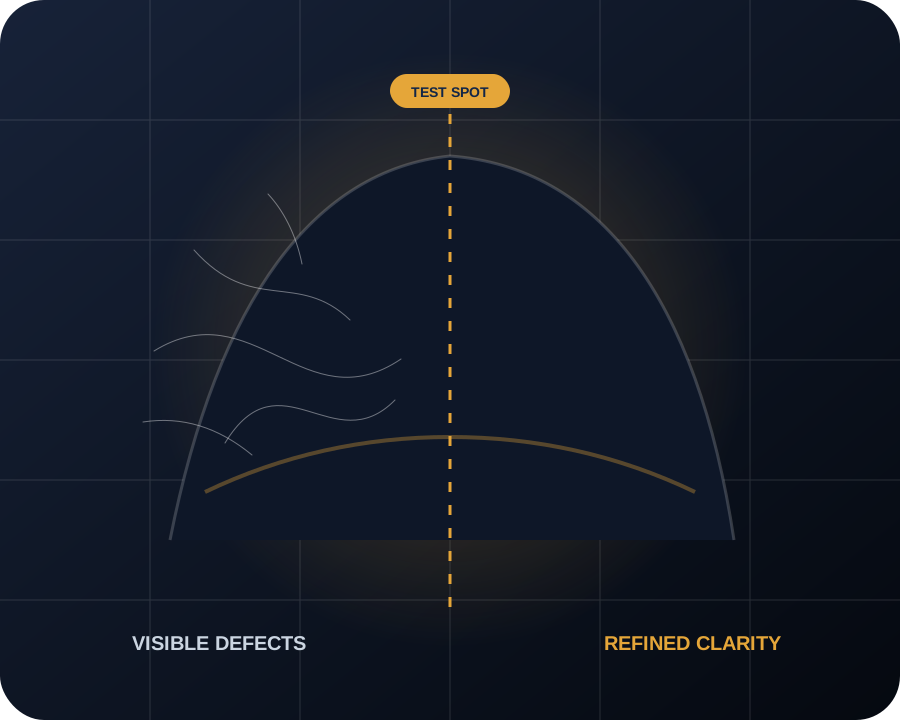
A test spot is useful because it shows how the paint responds before a full approach is chosen. It also helps set realistic expectations when defect removal is limited by safety.
The correct order: inspect, clean, correct, prepare, coat
When correction and coating are both selected, the order matters:
- 1Inspect the paintIdentify defects, damage, sensitive areas, and realistic correction limits.
- 2Wash and decontaminateRemove loose and bonded contamination before machine polishing.
- 3Correct and refineUse test spots and controlled polishing to improve the finish safely.
- 4Prepare the panelRemove oils and residue so the coating meets a clean surface.
- 5Apply and inspectInstall the coating methodically, level it correctly, and follow cure guidance.
Skipping preparation may reduce the quality of both appearance and application. Installing a coating over visible swirls does not lock in a corrected finish; it locks in an uncorrected one.
How to choose based on your goal
Choose paint correction when:
- Swirls, haze, oxidation, wash marring, or light scratches are the main concern.
- The paint looks dull or lacks clarity in direct light.
- You want to improve the finish before applying longer-lasting protection.
- You care more about appearance improvement than water behavior alone.
Choose ceramic coating when:
- The paint is already in acceptable condition or will be corrected first.
- You want easier maintenance and strong water behavior.
- You understand that safe washing is still required.
- You want to protect a prepared finish rather than hide defects.
Choose both when:
- You want visible defect improvement first and longer-lasting protection afterward.
- The vehicle is a long-term keeper and appearance matters.
- You are willing to maintain the finish correctly after the work.
Three common decision scenarios
The right order becomes easier when the goal is specific. These examples are not package promises; they show how condition and priorities change the recommendation.
The newer daily driver with light wash marks
The paint may benefit from a lighter refinement before coating. If the visible defects are mild and the owner values easier maintenance more than maximum defect removal, preservation can take priority over an aggressive correction plan.
The dark vehicle with years of swirls
Direct light may reveal enough haze and wash damage that coating alone would protect a finish the owner still dislikes. Inspection and a defect-focused correction plan usually deserve consideration before protection.
The vehicle with peeling clear coat or missing paint
Neither correction nor coating repairs failed paint. Refinishing, touch-up, or body work should be discussed first. Detailing can improve surrounding areas, but it should not be sold as a substitute for repair.
Questions to ask before approving either service
A clear conversation protects you from vague promises and helps the detailer plan the right amount of work.
- What problem are we solving? Appearance, protection, easier maintenance, or a combination?
- Which defects are likely to remain? Deep damage and failed paint should be identified before polishing begins.
- How will the paint be inspected? Direct lighting and a test area are more useful than guessing from shade photos.
- What preparation is included? Coating performance depends on the condition and cleanliness of the surface underneath it.
- What care is required afterward? The answer should include cure guidance and realistic washing expectations.
- What changes the final price? Vehicle size, condition, correction depth, previous repairs, and added surfaces should be discussed openly.
What affects the final cost?
Valiant paint correction starts at $300, and ceramic coating application starts at $650. These are starting points, not universal package prices.
Vehicle size, paint hardness, black or sensitive finishes, defect severity, previous repairs, contamination, correction depth, preparation time, coating selection, and additional surfaces can all change the amount of work.